October 1, 2026
Maintaining a properly functioning garage door is essential for household safety, vehicle security, and daily home accessibility. However, when an overhead door begins to jerk, stick, or refuse to lift altogether, the underlying issue is almost always a compromised spring system. Because these components are responsible for lifting heavy steel, wood, or insulated door panels, they operate under immense mechanical tension. Many homeowners attempt to save money by taking on the replacement process themselves, only to realize that working with high-tension hardware presents extreme physical dangers, operational challenges, and long-term financial risks. Understanding the engineering, safety protocols, and mechanical precision required for garage door spring repair reveals why this specific project should always be left to trained professionals.
Understanding Garage Door Springs
Garage door spring systems are engineered to counterbalance the massive deadweight of the door, allowing a motorized opener or a person to lift a 150 to 300-pound panel effortlessly. The industry utilizes two primary spring configurations: extension springs and torsion springs. Extension springs are mounted parallel to the overhead tracks and stretch horizontally as the door lowers, storing energy through linear tension. While common on older or lighter residential doors, extension springs rely on safety cables to prevent flying debris if they snap, making them notoriously volatile during replacement.
In contrast, modern residential installations rely primarily on torsion springs. Mounted on a heavy steel shaft directly above the door header, a torsion spring system operates by twisting along its axis to store rotational energy. A complete garage door torsion spring replacement involves winding or unwinding these steel coils using specialized winding bars. Torsion springs offer far superior balance, smoother operation, and longer lifespans than extension systems, but they hold extreme amounts of potential kinetic energy. Selecting the proper wire gauge, inner diameter, and overall spring length is crucial, as even a minor mathematical error during component selection will throw the entire door out of balance.
Regardless of the spring style, these steel components operate under severe mechanical fatigue. According to HomeGuide, spring replacement is the most frequent garage door repair since most springs only last for 10,000 to 20,000 cycles. Over time, daily thermal expansion, humidity, and constant mechanical cycling degrade the metal, leading to rust, micro-fractures, and eventual structural snapping. Recognizing early signs of wear—such as visible gaps in the coils, slow lifting, loud squeaking, or an opener motor that strains—is essential for preventing complete failure.
Potential Risks of DIY Replacement
The most immediate danger of an amateur spring repair is severe physical injury. Because torsion springs store hundreds of foot-pounds of torque, a slipping winding bar, an uncalibrated vice grip, or a snapping component can strike an installer with immense force. DIY enthusiasts frequently suffer deep lacerations, broken bones, loss of fingers, or severe facial trauma when attempting a garage door torsion spring replacement without formal mechanical training. Professional technicians undergo rigorous safety instruction, utilizing heavy-duty steel winding rods and protective gear specifically engineered to absorb sudden kinetic releases safely.
Beyond personal harm, DIY attempts routinely cause extensive property damage. An unbalanced or suddenly dropping garage door can crush parked vehicles, shatter concrete floor slabs, or buckle the structural door tracks. Furthermore, if the spring tension is incorrectly calibrated, the motorized garage door opener will struggle to pull the dead weight, burning out its internal drive gears or frying its circuit board within days. What began as an attempt to save a small amount on labor often results in thousands of dollars in structural and mechanical replacement costs.
Incorrect installation also carries long-term legal, financial, and compliance liabilities for the property owner. If a DIY garage door torsion spring replacement is performed incorrectly and subsequently fails, the falling door panel can injure family members, visitors, or delivery personnel, exposing the homeowner to severe legal claims. Additionally, many property insurance carriers will deny claims for property damage or personal injury if the loss resulted from unpermitted or non-professional structural work. Professional installation guarantees that work satisfies local building codes while maintaining valid manufacturer warranties across all hardware components.
The Complexity of the Replacement Process
Executing a successful garage door torsion spring replacement involves far more than simply unbolting the old part and installing a new one. The replacement process requires specialized commercial tools that average homeowners do not possess in their standard toolkits. Precise winding bars, heavy-duty C-clamps, specialized vice grips, and calibrated torque wrenches are required to secure the stationary cone, hold the center bearing plate, and wind the spring coils safely. Substituting makeshift tools, such as screwdrivers or pliers, for purpose-built winding rods is one of the leading causes of catastrophic DIY accidents.
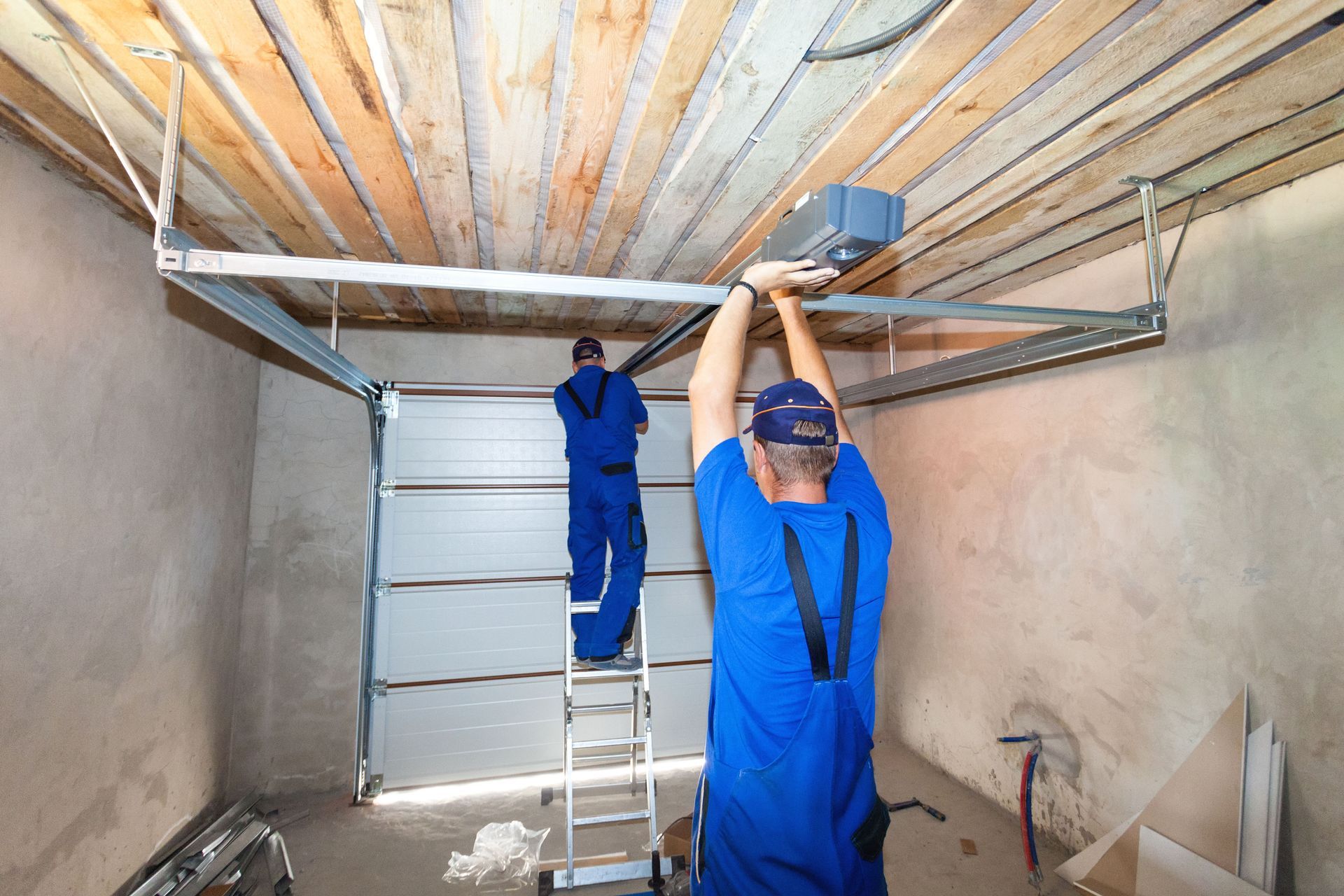
The physical step-by-step procedure demands strict adherence to engineering sequences. The technician must completely lock down the door panel, safely unwind the remaining tension in any unbroken spring, loosen the set screws on the drums, and slide the entire center shaft out to swap the failed coils. Once the new springs are mounted, the drums must be set with equal cable tension on both sides. The final phase—winding the new torsion spring to the exact number of quarter-turns based on door weight and drum diameter—requires physical strength, precise mathematical calculations, and unwavering focus.
Achieving perfect mechanical balance is the ultimate measure of a successful spring service. An unbalanced door will drift downward when lifted manually or snap upward violently when unlatched. Professional technicians perform precise manual balance tests, adjusting the spring tension until the door floats effortlessly at knee-height, waist-height, and shoulder-height. Attempting a garage door torsion spring replacement without the ability to fine-tune this mechanical equilibrium leads to crooked door travel, stripped rollers, and premature wear across the entire track system.
The Value of Professional Expertise
Hiring a certified technician for a garage door torsion spring replacement eliminates all physical danger while guaranteeing top-tier mechanical performance. Professional repair firms maintain access to commercial-grade, oil-tempered steel springs that far outperform standard off-the-shelf retail components. These high-cycle springs feature corrosion-resistant coatings and heavy-duty wire alloys designed to withstand decades of daily use. Furthermore, professional services inspect the complete door assembly during the visit, replacing worn center bearings, frayed lifting cables, and degraded track rollers before they trigger additional mechanical breakdowns.
Working with an established garage door company also provides long-term financial foresight and peace of mind through comprehensive warranties. Reputable contractors stand behind their work with multi-year parts and labor guarantees, ensuring that if a spring exhibits premature fatigue or loses tension, it will be serviced without additional out-of-pocket costs. The speed, efficiency, and safety provided by experienced professionals vastly outweigh the temporary, high-risk savings promised by amateur DIY repair tutorials.
Attempting a DIY replacement on a garage door spring system is a dangerous gamble that poses extreme risks to your personal safety, home property, and financial security. The immense kinetic energy stored within these heavy steel coils demands specialized winding equipment, precise mathematical calculations, and years of professional field experience to handle safely. By turning a critical garage door torsion spring replacement over to certified experts, you protect your household from severe physical injury while ensuring your overhead door operates smoothly, quietly, and reliably for years to come. When your overhead door shows signs of spring wear or fails to lift, trust the experienced technicians at Third Gen Garage Doors to provide fast, professional, and fully guaranteed service.